The Polish Crown: Five Half Marathons in One Year
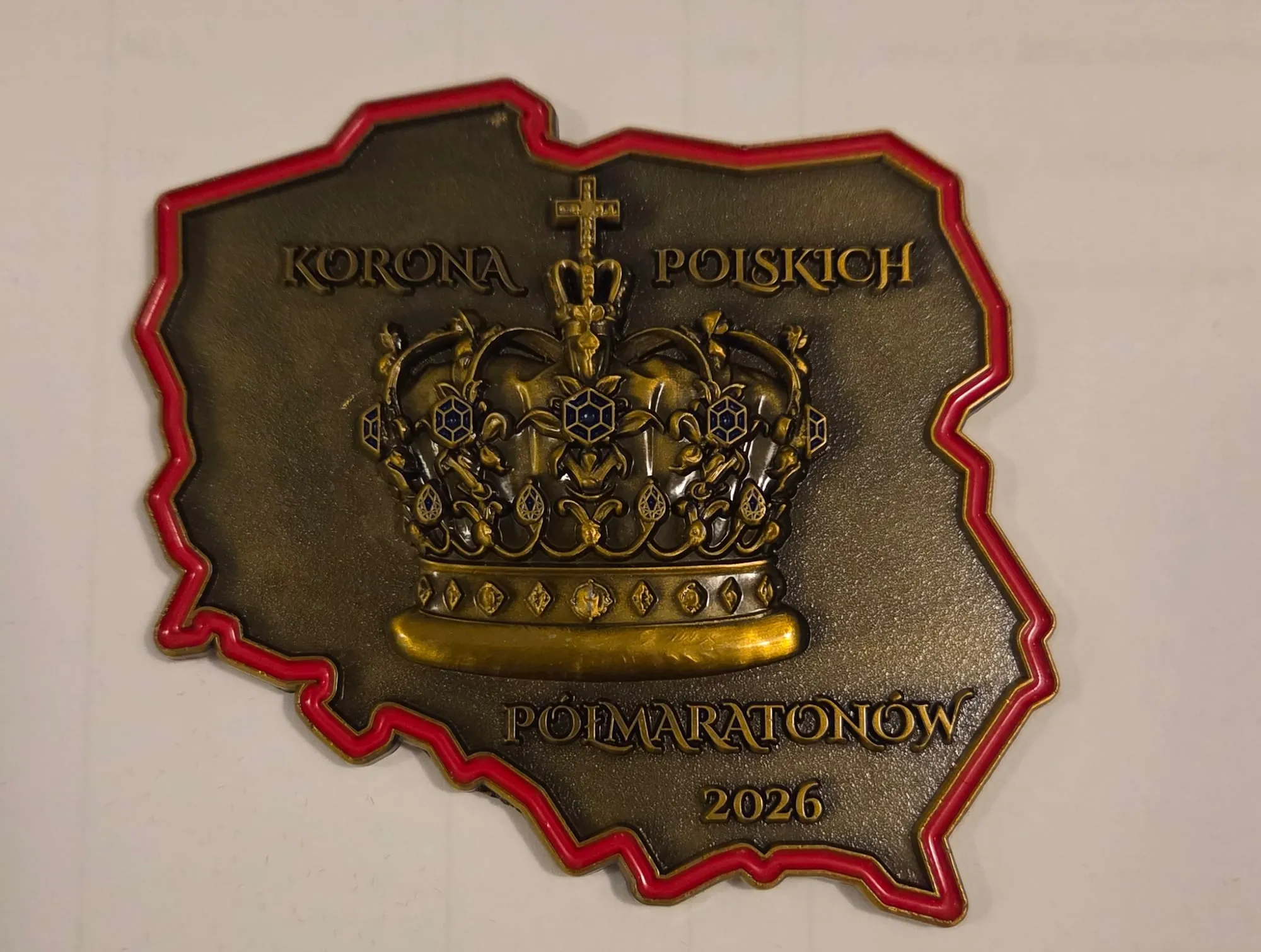
After finishing the SuperHalfs in Berlin, my running friend Adrian and I needed a new challenge. So we looked at what other race series there are around Europe, and we found two: the Polish Crown, in Poland, and the Circuito Nacional de Running Plátano de Canarias, in Spain, with races in Seville, Barcelona, Madrid, Valencia and San Sebastián. We decided to take on the Polish one.
Adrian was working in Poland, so it was much more convenient for him, and for me, to fly to Poland. That’s why we chose the Polish Crown. Poland is also a lovely place to visit, with a lot of history and many beautiful cities, like Kraków and Gdańsk.
What the Polish Crown Is
The Polish Crown, officially Korona Polskich Półmaratonów, the Crown of Polish Half Marathons, has been organised since 2013 by Polskie Stowarzyszenie Biegów (PSB), a running association from Piła. To earn it, you have to finish at least 5 of the 11 half marathons on its list within one calendar year.
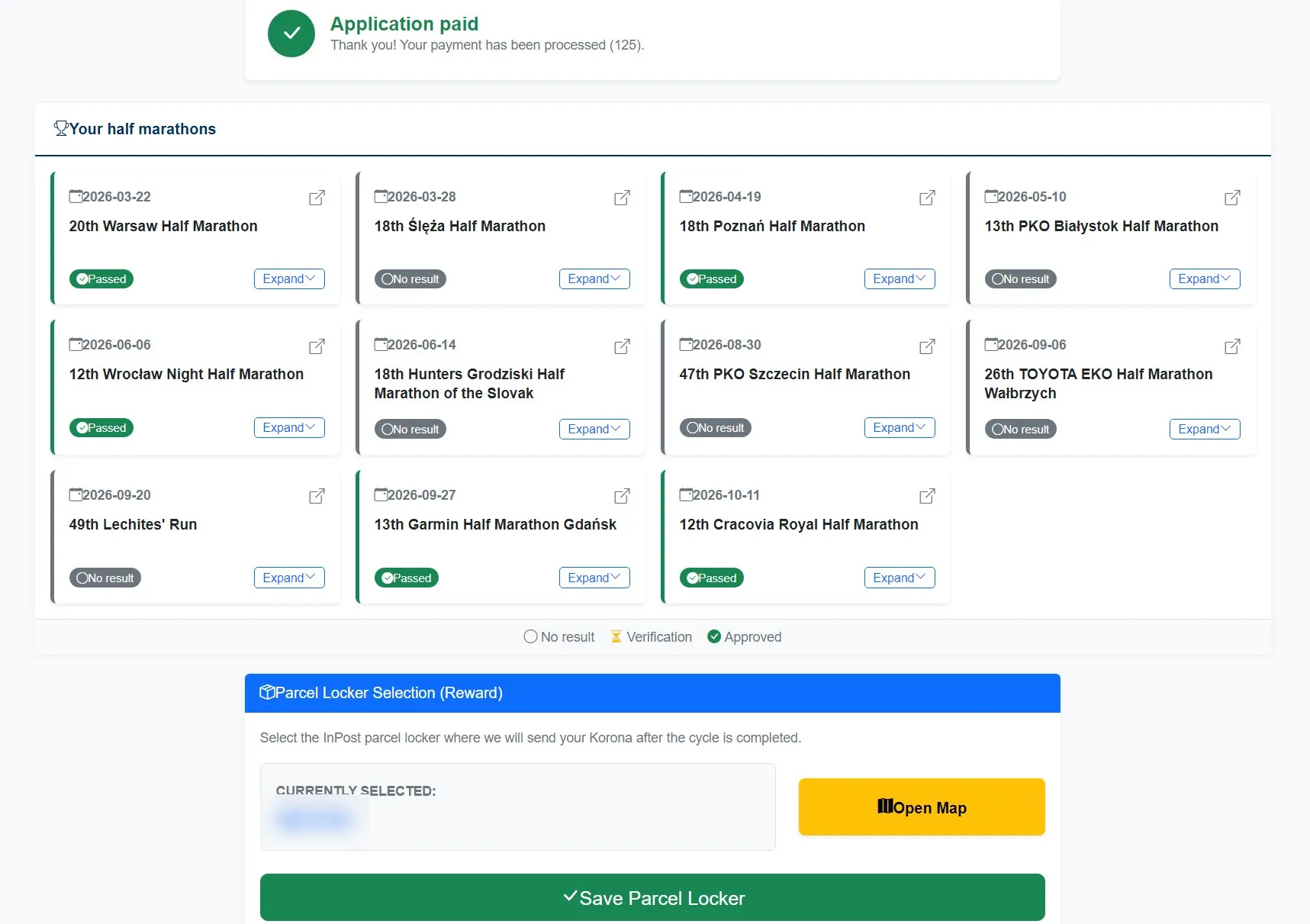
Everything starts on the PSB website, which is hard to find. From there, you get to the 2026 rules (in Polish), with the list of races. Then I created an account on Datasport, the registration site, and paid the fee, 125 zł in 2026. Once you’ve finished your five races, they send you the Crown.
The difficulty of the Polish Crown is that you have to run all five races in a single year. For a runner who’s just starting out, that could be a big challenge.
These were the 11 races in 2026. We had to choose five, and we picked the five biggest city races, in bold, each with a link to my report:
| Race | Date |
|---|---|
| Warsaw | 22 March |
| Sobótka | 28 March |
| Poznań | 19 April |
| Białystok | 10 May |
| Wrocław, night half marathon | 6 June |
| Grodzisk Wielkopolski | 14 June |
| Szczecin | 30 August |
| Wałbrzych | 6 September |
| Gniezno | 20 September |
| Gdańsk | 27 September |
| Kraków | 11 October |
In your Datasport account, each race you finish should be marked automatically once the results are in. If one isn’t, you have to go in, add the result by hand, and ask for it to be validated.
Another important step is choosing where the Crown should be delivered. They send it to an InPost parcel locker in Poland, which you pick on a map in your account.
Why These Five
Warsaw was an easy choice: it’s a very big race, in Poland’s capital, easy to get to, and there’s plenty to see over a weekend.
Poznań, in April, was an easy choice too: it came a month after Warsaw, and it’s a historic city, so we didn’t have to think about it for long.
Wrocław, in June: I’d kept May for the Bucharest Half Marathon, so for June the choice was simple, between Wrocław and Grodzisk Wielkopolski. We chose Wrocław because it’s another old city, with plenty to see.
Gdańsk and Kraków, in the autumn: once we’d chosen the first three races, there was no doubt that the last two, to complete the series, had to be Poland’s most beautiful cities, Gdańsk and Kraków. The only challenge was that they’re just two weeks apart. But it turned out that if you run the first one more easily, you can push harder in the second.
How the Year Went
Warsaw, 1:42:08: the best start to a season since I started running, 4:38 faster than my first races of 2024 and 2025. It made me believe I could run under 1:40 later in the year.
Poznań, 1:47:04: four days after Warsaw, on my first easy run after a speed session, I strained my adductor. I came to Poznań still recovering, and I ran it too fast. It felt like a missed opportunity.
Wrocław, 2:03:59: the night race. At around km 10–11, I felt a slight pain in my left knee, and it got worse with every kilometre, until I had to walk almost the last 5 km. Afterwards, I found my mistake: I’d been pushing off the ground with my foot as hard as I could, which put a lot of pressure on my knee.
Gdańsk, 1:48:25: after 16 weeks without racing, I tried something new. I didn’t let my heart rate go above 167, and I consciously lifted my feet. I ran the same steady pace from start to finish, and the second 10 km were 13 seconds faster than the first. What I was missing was speed.
Kraków, 1:45:25: two weeks later, with the same low heart rate and the same foot lift, my speed started to come back, and that reassured me. It was my best time in the series after Warsaw.
In total: five races, 105.5 km, in 9:07:01.
The Crown
All along, I thought I’d get a real crown. I’d seen lots of photos of people running with crowns on their heads, and I’d even seen it with my own eyes at some races. So I waited eagerly for my crown, which in the end turned out to be a more festive medal, as you’ll see in the photo below.
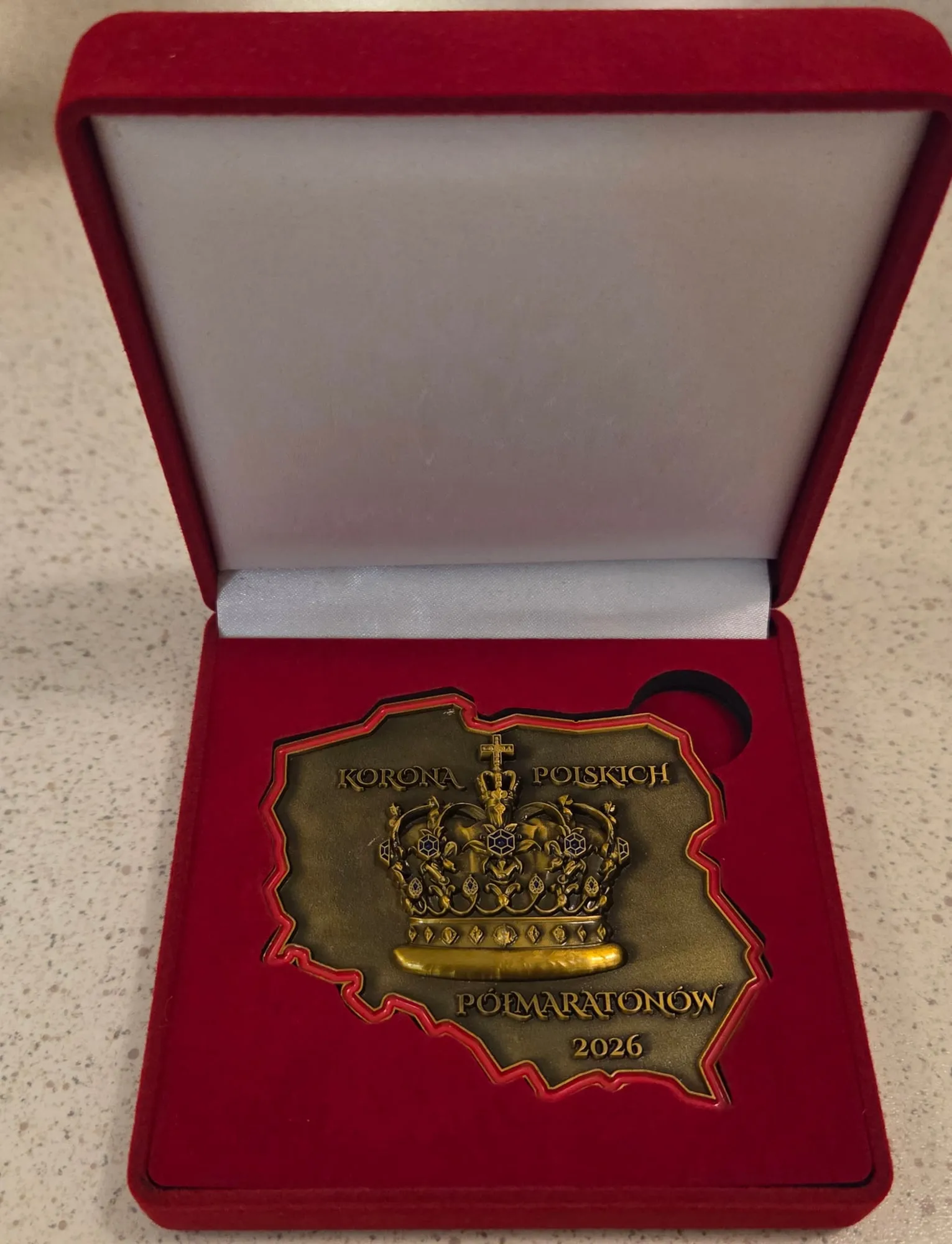
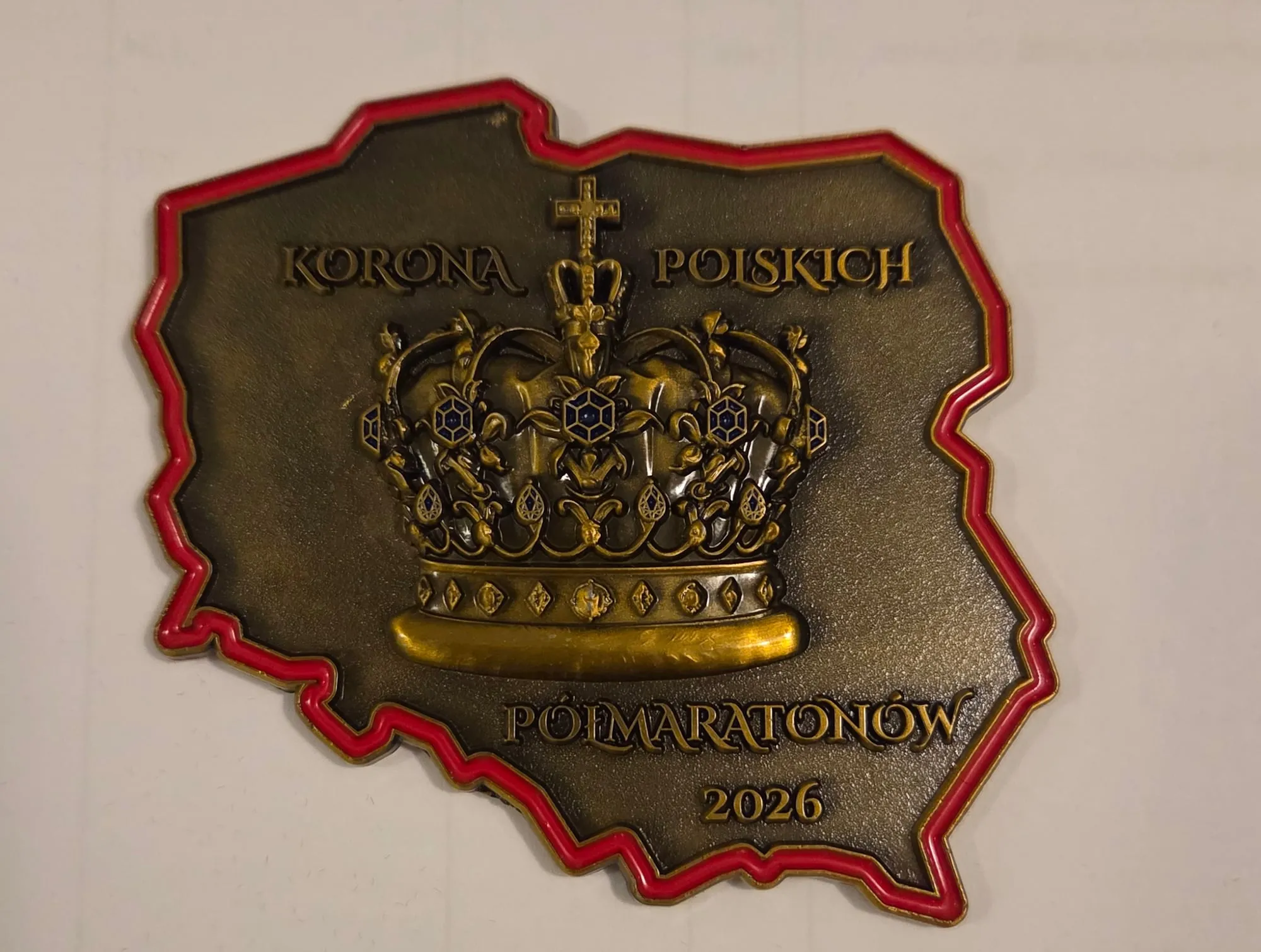
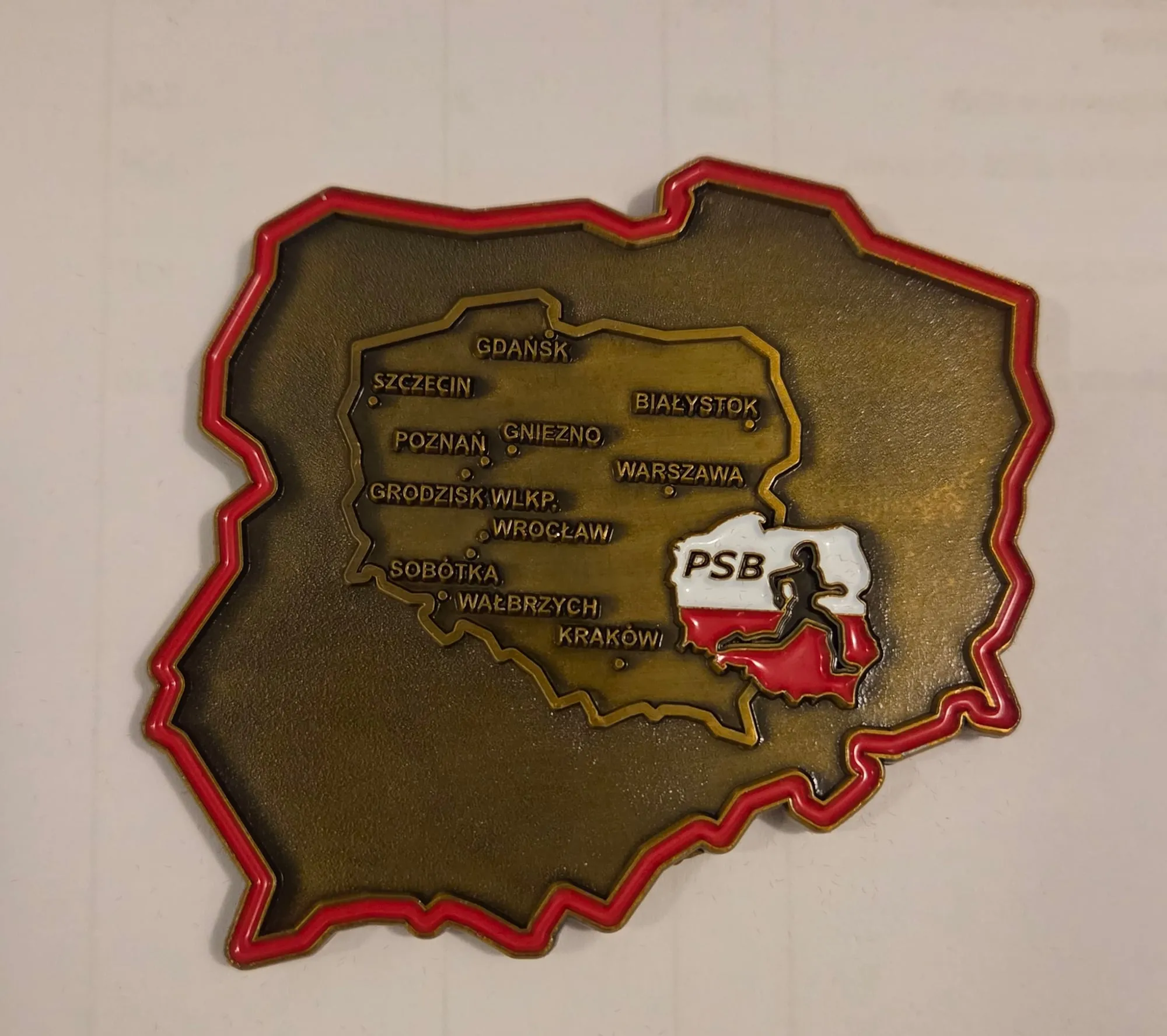
Even so, it was a beautiful experience. I saw Poland, I saw a lot of history, and I have even more respect for the Polish people. They’re an example for my country to follow.
Final Thoughts
I warmly recommend the Polish Crown. You’ll get to discover a wonderful country, with a beautiful history and beautiful cities to visit. 👑
Running them yourself?Plan these races with euroslam.runWarsaw Half Marathon →Poznań Half Marathon →Wrocław Night Half Marathon →Gdańsk Half Marathon →Kraków Half Marathon →EuroSlam is my own free side project. Some hotel links on the site earn me a small commission, at no extra cost to you.
I'm a recreational runner with an office job, testing running science on my own legs. More about me.